
How to Prevent Overheating During Summer Driving in London
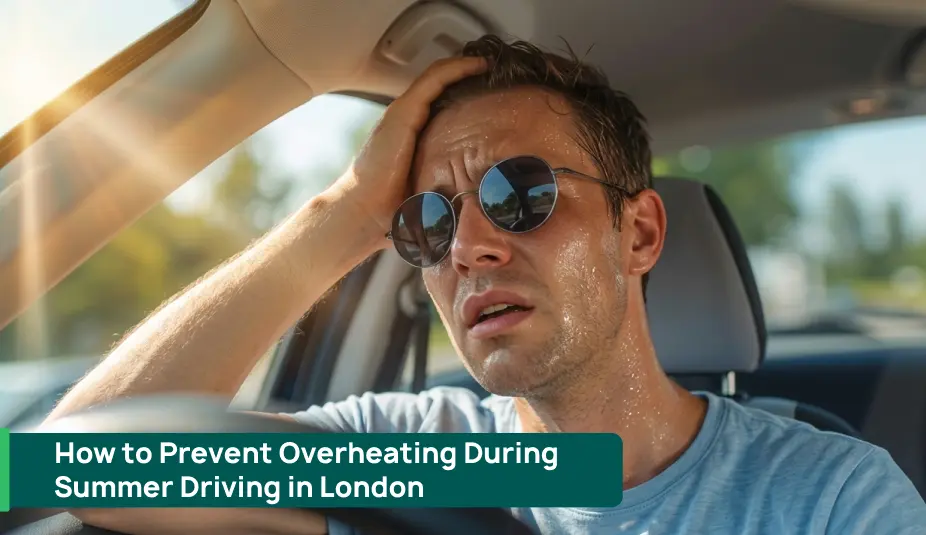
Private hire drivers in London know how quickly a sunny day turns uncomfortable inside the car. Stop-start traffic traps heat in the cabin, and the air conditioning struggles to keep up. Even a short wait at a red light is enough to push the temperature higher.
Here’s the reality for private hire drivers using PCO rental in London: your vehicle works far harder than an average commuter’s car. A PCO car driver doesn’t do a 40-minute round trip twice a day; their daily commute stretches up to an 8 to 10-hour drive per day.
In summer heat, those small stresses add up quickly. When a car overheats, it doesn’t just disrupt your day or slow you down for a few hours. It can also lead to serious engine damage, including a warped cylinder head, a cracked engine block, or a blown head gasket.
In this article, we share tips on how to prevent overheating during summer driving in London. Let’s begin.
Article Highlights
This article covers:
- Why is overheating common in London
- Key signs your car is overheating
- Tips to prevent overheating
- What to do if your car starts overheating






Why Overheating Is a Common Problem in London
Modern engines run most efficiently when the vehicle is in motion. At speed, air flows through the grille, across the radiator, and out through the engine bay, handling much of the cooling naturally. But in stop-start traffic, that airflow disappears. The radiator fan has to take over completely, often working at full capacity just to maintain normal temperatures. Now picture central London traffic in July or August. Covering just three miles can take 40 minutes or more.
You brake, crawl, stop, wait, move a few feet, and stop again. Throughout, your engine continues generating heat, and your cooling fan runs constantly. But without enough airflow to help its efficiency, the engine overheats. This can be a serious problem for drivers using PCO rental in London.
Key Signs Your Car Is Overheating
- The most obvious sign is the temperature gauge on your dashboard climbing into the red or into the upper zone
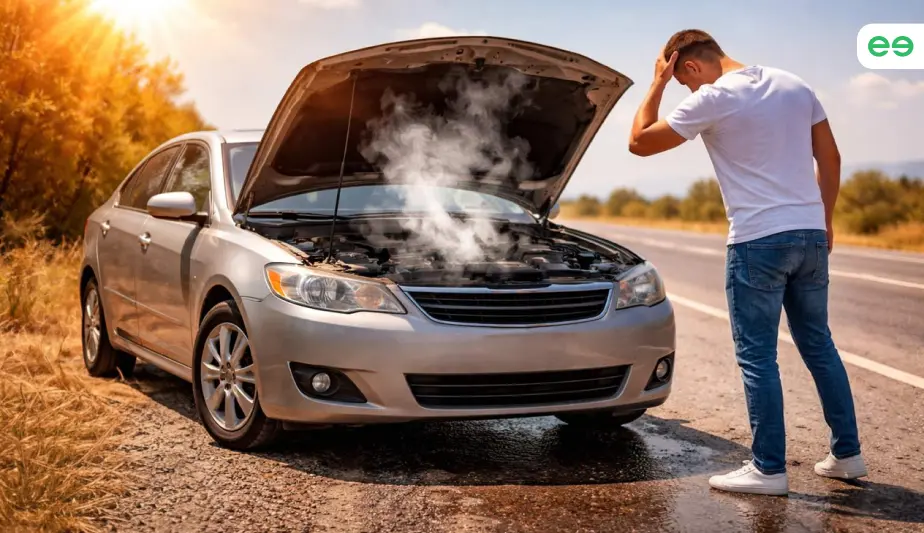
- Steam coming from under the bonnet is a warning sign
- If your car starts to feel sluggish or hesitates under acceleration, it’s a sign of overheating
- A knocking or ticking sound from the engine when it’s running
Also Read: 7 Signs to Replace Your PCO Car in London
Tips to Prevent Overheating
Here’s how to prevent overheating during summer in London:
Check Your Coolant Levels Regularly
Coolant circulates through your engine, absorbs heat, and continues to the radiator, where it dissipates into the air. Without adequate coolant, your engine has no way to regulate its temperature, which can lead to overheating.
You should check your coolant level at least once a week during summer if you’re doing high mileage. The coolant reservoir has a ‘ MIN’ and ‘MAX’ marking on the side. When the engine is cold, the level should sit between those two markers. If it consistently sits at or below the MIN line, that tells you the system is losing coolant somewhere through a leak, a failing hose, or it simply needs topping up.
Maintain Your Radiator and Cooling System
The radiator is the heart of your car’s cooling system. It’s a network of small tubes and fins through which the coolant flows. It relies on proper airflow and clean internal passages to do its job properly. Over time, both of those things can become compromised.
On the outside, road debris, dead insects, leaves, or London grime can clog the radiator’s fins. When airflow through the fins becomes restricted, the radiator can’t dissipate heat efficiently. A gentle rinse with a low-pressure hose can clear that buildup.
On the inside, old coolant or an incompatible coolant can leave greasy deposits scaling up to the radiator’s internal walls. This unnecessary coating reduces the internal diameter of the tubes, slowing the coolant flow. That means fewer heat transfers per cycle, causing overheating.
Stay on the road this summer with a reliable PCO car from Fleeto, built to handle long hours and heavy traffic. Minimise the risk of overheating and avoid costly downtime with well-maintained, driver-ready vehicles. Drive with confidence, even in peak heat, with Fleeto’s PCO car hire plans.


Don’t Overwork Your Engine in Traffic
Every bit of extra load you place on the engine, whether that’s the prolonged air conditioning, carrying a heavy load, aggressive acceleration, or towing, generates more heat. The cooling system is then responsible for managing that extra thermal load.
In slow-moving traffic, keep acceleration smooth and measured. Harsh acceleration followed by hard braking puts repeated thermal spikes through the engine. Maintaining a steady pace not only reduces fuel consumption but also keeps the engine temperature more stable. The less dramatically your engine works, the less heat it produces.
Use Air Conditioning Wisely
Air conditioning is both a necessity and a complication in summer driving. An AC compressor puts a lot of load on the engine, typically ranging from 5 to 10 horsepower. In a car that’s already running warm, that extra demand matters.
Many modern cars have an economy mode or eco setting on the air conditioning. This modulates the compressor output rather than running it at full capacity constantly. This helps to reduce the engine’s load without dramatically affecting cabin temperature once the car has cooled down. If your car has this feature, use it during slow traffic when thermal conditions are at their worst.
Check Engine Oil Levels
Engine oil doesn’t just lubricate your car’s moving parts; it also plays a significant role in cooling. Oil circulates through the engine, picking up heat from components that the coolant doesn’t directly contact.
That includes areas in and around the cylinder head, valve train, and piston walls. In high-temperature conditions, the oil works harder than usual. If it’s low, old, or has the wrong viscosity, it can’t do the job effectively.
Pro tip: Check your oil level weekly during summer to reduce the risk of breakdowns.
Plan Your Routes to Avoid Heavy Traffic
Route planning is one of the most underrated tools for vehicle health. Every minute your car spends stationary is a minute your cooling system is under extra load due to minimal support from natural airflow.
Use your local knowledge of the city alongside navigation apps to anticipate traffic congestion instead of simply reacting to it. Apps like Google Maps and Waze provide real-time traffic updates that can help you choose faster routes.
If you’re between jobs and can choose where to wait, pick locations with shade. Parking under a tree or in a multi-storey car park keeps the engine bay cooler during rest periods.
Also Read: Dashboard Warning Lights: When to Contact Your Car Provider
What to Do If Your Car Starts Overheating- A Beginner’s Checklist
- Turn off the AC and reduce the engine load.
- Pull over safely as soon as possible.
- Let the engine cool before checking.
- Never open the radiator cap when it’s hot.
- Call for assistance if the problem is worse.

Start Earning Today.
Final Thoughts
Your car won’t overheat after one long trip; it is something that has been building for a while. Reasons can range from a faulty cooling system, an aged coolant, or a softened hose.
However, all of this is preventable with regular maintenance and attention to the small signs. As a private hire driver using PCO rental in London, your vehicle is your livelihood. Every breakdown costs you money in lost fares. Take this guide as your go-to whenever you get stuck in a breakdown. With small investments towards your car maintenance, you can avoid a bigger breakdown and keep your car in good condition, amping up your rating.
Frequently Asked Questions
How to prevent car overheating in summer?
Keep your coolant topped up, check the radiator and hoses regularly, and avoid driving in extreme heat for long periods. Smart use of air conditioning and proper maintenance also help.
Does pouring water on the engine help cool it down?
No, pouring water on a hot engine can cause sudden temperature changes and damage engine components. It’s safer to let the engine cool naturally before taking any action.
Where to pour water when a car overheats?
Only add coolant or water to the radiator or coolant reservoir, never directly onto the engine. Make sure the engine has cooled down before opening the cap to avoid burns.
What are the common causes of car overheating?
Low coolant levels, radiator leaks, faulty thermostats, broken water pumps, and blocked airflow are common causes. Poor maintenance often makes the problem worse.
Is a car ruined if it overheats?
Not always, but severe overheating can cause serious engine damage like a blown head gasket. If addressed quickly, the car can often be repaired without long-term issues.

Suggested Blogs
To get more information like this
Subscribe to our newsletter
Stay on the Road Uninterrupted with Fleeto!
All our plans have fair terms with everything you need included for a fixed weekly fee. We also offer breakdown assistance with a replacement vehicle to minimise your downtime. Book your preferred car or call us for more details.

