
Comparing Petrol and PHEV Cars for PCO Use in London
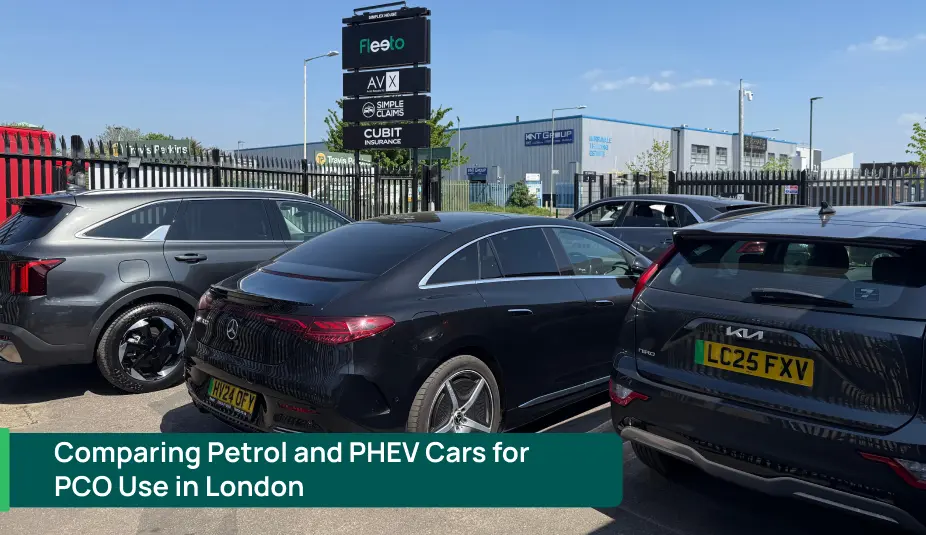
The choice between petrol and PHEV cars affects your profits as a PCO driver in London. Petrol cars usually have low PCO car hire fees, but fuel costs can be higher. On the other hand, PHEVs have slightly higher weekly fees, but they combine fuel with electric power to lower your running costs.
That said, there’s more to driving a petrol or PHEV than just their running costs. For instance, Transport for London regularly updates its emission rules for private hire vehicles. Your vehicle choice directly impacts your compliance with TfL standards.
The real question isn’t which car is better. The question is which car fits better with your needs.
This article compares the practicality of petrol and PHEV cars for PCO use in London. Read it carefully to make an informed choice.
Article Highlights
This article covers:
- The definitions of petrol and PHEV cars
- Key differences between these two types of vehicles
- Cost comparison for PCO drivers
- Practicality for London driving, and more.






What is a Petrol Car?
A petrol engine burns fuel for power. There’s no backup to drive you forward when the petrol runs out. Petrol cars also emit high levels of carbon dioxide and particulate matter. These substances damage London’s air quality, which TfL takes seriously. Petrol vehicles that do not comply with TfL’s Euro-4 or Euro-6 emission standards have to pay the daily ULEZ Charge (£12.50 per day). Paying this charge on a daily basis can significantly eat into your weekly profits.
What is a PHEV?
PHEVs combine a petrol engine with an electric motor powered by a battery. The battery needs an external power source for charging, and it can power the car in electric mode for 40 to 50 miles. Some PHEVs also support a higher range. When the battery depletes, the petrol engine takes over to supply power.
The biggest perk of PHEVs is their flexibility to switch between fuel and battery power. You can complete short trips on electricity alone, while long journeys use the petrol engine. This dual capability is ideal for private hire work.
Also Read: What are the Best Electric Cars for PCO Drivers in 2025?
Key Differences Between Petrol and PHEV Cars
Here are some important things to consider before deciding between a petrol car and a PHEV:
Powertrain and Energy Source
Petrol cars have one power source in the form of an internal combustion engine. It often operates inefficiently in stop-start traffic. On the other hand, PHEVs use electric motor for low-speed city driving while petrol engine assists for speed and longer trips. This allows each system to work in its optimal range.
Emissions and Environmental Impact
Your vehicle’s emissions must comply with London’s air quality rules. Petrol cars emit pollutants constantly, while PHEVs produce zero tailpipe emissions in electric mode. This helps you avoid many compliance issues. Even using both systems, the total emissions of PHEVs are much lower compared to petrol cars.
Fuel Economy
Fuel costs are a major expense for PCO drivers. A petrol car can offer 40 to 60 miles per gallon in normal driving conditions. However, heavy traffic significantly lowers this amount.
A PHEV uses battery power for slow city driving to reduce fuel consumption. If you charge your PHEV at home, it will only cost you about 7 pence per mile. This is significantly lower than 12-14 pence per mile for petrol.
Looking for a PHEV or petrol car for PCO use in London? Fleeto has TfL-compliant cars ready to drive. Enjoy flexible rental terms with 24/7 driver support. Our booking process is quick and simple, allowing you to drive away on the same day. Join thousands of private hire drivers who trust Fleeto for reliable cars. Find your perfect vehicle and boost your earnings.

Cost Comparison for PCO Drivers
Cost considerations are also important when deciding between a petrol car and a PHEV for PCO use. Here’s how their costs work:
Initial Costs: Hire Prices
Petrol cars cost less to hire compared to PHEVs. For instance, the weekly fire fee for a petrol car is usually around £200, while PHEVs can cost around £250+ per week. However, the higher fuel cost for petrol cars can significantly reduce this margin.
Running Costs: Fuel vs Charging Expenses
PHEVs have lower running costs compared to petrol cars. For instance, electricity for home charging costs less per mile. A driver covering 600 miles weekly spends about £48-72 on petrol. The same driver with a PHEV spends about £36-54 on electricity + fuel charges. This can save you about £15-20 per week. However, using public chargers to power up your PHEV can reduce these savings.
Also Read: These 5 Habits Can Increase Your Car’s Running Costs
Practicality for London Driving
Regarding practicality for PCO work in London, both types of vehicles have pros and cons. Let’s look at them:
Range: Petrol Convenience vs PHEV Flexibility
Petrol cars offer a range of 300-400 miles on a full tank. Refuelling is quick and readily available as well.
PHEVs have a dual-range capability. Their electric range suits short trips, while their total range can exceed petrol cars. This is perfect for mixed work involving both short and long-distance trips.
Refuelling: Charging Time vs Quick Petrol Refills
Petrol refills take about five minutes, perfect for short breaks. PHEV charging requires more time. A full charge at home typically takes around 6-8 hours, while a Level 2 public charger can take up to 2 hours. Smart drivers charge overnight or top up during meal breaks to avoid downtime. The key advantage here is that a PHEV never interrupts your working hours. It simply switches to petrol when the battery depletes.
Long Shifts and Airport Runs
Consider your typical work pattern. Petrol cars excel on long shifts and airport runs. You can drive them for hours without stopping. PHEVs are suitable for urban areas if you want minimal reliance on petrol. A full charge can cover multiple short trips. For airport runs or distance trips, PHEVs use petrol, which is more expensive per mile.
Also Read: Heathrow Drop Off Charges: A Practical Guide For PCO Drivers


Compliance and TfL Regulations
Consider the following requirements as well before deciding between a petrol car and a PHEV:
Zero Emission Capable
London’s emission rules are evolving. Since January 2023, all new private hire vehicles must be Zero Emission Capable and meet strict CO2 limits. Regular petrol cars cannot meet this standard. This may affect your ability to work as a private hire driver in London.
TfL Licensing and Emission Standards
Petrol cars must meet Euro 4 emission standards to avoid the ULEZ charge. The ZEC rules apply to new licenses only. Existing private hire petrol cars can operate until they are 10 years old. PHEVs face no such restrictions, which makes them a more stable choice for PCO work in London.
Future Outlook: Regulatory Direction
London’s emission rules are likely to become stricter. The city plans to clean its air, so the future standards will prioritise zero emission capability even more. Petrol cars have a limited future in the PCO industry, while choosing a PHEV future-proofs your investment.

Start Earning Today.
So, Which Option Suits You Best?
Choose a petrol car if you often drive outside London and lack home charging. It is also the right choice for those with a limited income who cannot afford the higher weekly PCO car hire fees of PHEVs.
Choose a PHEV if you have home charging and work mostly inside the city with short trips. It will keep your running costs low and compliant with current and future emission rules. The higher weekly rental pays for itself through fuel savings.
Frequently Asked Questions
Are PHEVs more expensive to hire than petrol cars?
Yes, PHEVs usually have slightly higher weekly hire fees, around £250 compared to £200 for petrol cars. However, their lower fuel and charging costs often make up for this difference over time.
Can I use a petrol car for Uber or Bolt in London?
Yes, but your petrol car must meet TfL’s Euro 4 or Euro 6 emission standards. If it doesn’t, you will need to pay the ULEZ charge (£12.50 per day), which can quickly eat into your earnings.
Do PHEVs meet TfL’s emission standards?
Yes. Most PHEVs are Zero Emission Capable (ZEC) and comply with TfL’s latest private hire regulations. This makes them a safer long-term choice for London-based PCO drivers.
How long does it take to charge a PHEV?
A full charge at home takes around 6-8 hours, while public fast chargers can do it in about 1-2 hours. Many drivers charge overnight or during meal breaks to avoid downtime.
What happens if I don’t have home charging access?
You can still drive a PHEV using petrol, but your savings will be lower. If you can’t charge at home, a petrol car may be more practical for now. However, future emission rules may change this.

Suggested Blogs
To get more information like this
Subscribe to our newsletter
Find Your Perfect PCO Car With Fleeto Today!
We have a large fleet to help you pick the right car. Choose from our flexible PCO hire or rent-to-buy plans and drive away within minutes. There is no need to manage insurance or complex paperwork; we handle it all for you.

