
A Comparison of EVs vs PHEVs for PCO Drivers in London
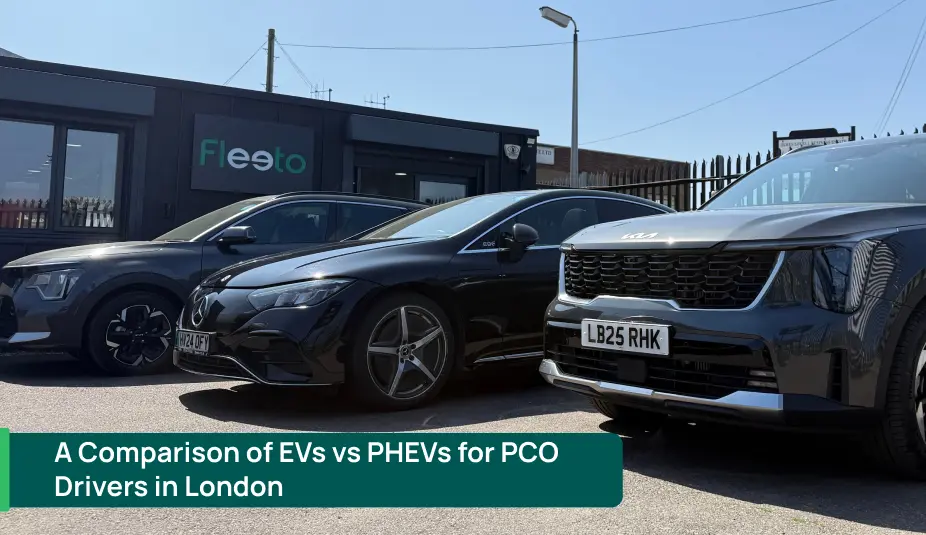
London is transitioning towards sustainable transport, with authorities pushing for EVs and PHEVs. For PCO drivers, petrol or diesel vehicles are no longer affordable due to daily emission charges that can eat into their profits.
The best way to avoid these charges is to drive a fully electric vehicle or a Euro-4 or Euro-6 compliant plug-in hybrid. Both types of vehicles are Zero-Emission Capable (ZEC), but they differ in many ways.
If you are planning to hire one on a PCO car hire plan, our comparison below will help you make an informed decision.
Article Highlights
This article covers:
- Basics of EVs and PHEVs
- Key differences between the two
- Cost considerations for private hire drivers
- TfL and PCO licensing requirements for vehicles





Understanding Both Vehicle Types
EVs use an electric motor and a battery instead of a traditional engine. They are growing in popularity because they don’t release any harmful emissions and need an external charging source. EV range depends on battery capacity.
A PHEV uses two different power sources: a battery with an electric motor that works in combination with an internal combustion engine operating on petrol or diesel. The car will use its electric motor for short distances and switch to the engine automatically once the battery depletes or its speed crosses the electric-only range.
Also Read: 11 Best Cars for PCO Drivers in 2025
Key Differences Between EVs and PHEVs
There are many differences between EVs and PHEVs, including:
Power Source
EVs rely completely on electricity for power. Charging them can take from 30 minutes to several hours, depending on charger’s speed.
PHEVs offer a choice. Drivers can plug in to charge the battery or simply refuel the tank. This is valuable for PCO drivers who cannot afford long charging sessions during their driving hours.
Driving Range and Fuel Backup
Driving range and fuel backup are another key difference. Many modern EVs give 250 miles after a recharge. This is usually enough to cover a full PCO shift comfortably.
In comparison, PHEVs only offer around 40-50 miles on battery. However, their overall range with a full petrol tank can exceed 500 miles. This removes range anxiety for PCO drivers who prefer long-distance trips and airport runs.
Environmental Impact
EVs produce no tailpipe emissions and contribute directly to cleaner city air. PHEVs produce zero emissions only in electric mode. Once the battery depletes, they burn petrol and emit CO2.
For a PCO driver, this environmental factor ties directly to emission regulations in London. For instance, EVs are exempt from ULEZ and Congestion charges in London, while PHEV drivers in Central London must pay a £15 Congestion Charge per day. Similarly, if a PHEV isn’t Euro-4 or Euro-6 compliant, you must also pay the daily ULEZ charge which is £12.50 per day. However, this is extremely rare for PHEVs as most of them are ULEZ-compliant.
Hire an EV or PHEV with Fleeto to save on fuel costs. All our cars meet TfL’s emission standards to keep you on the road without worrying about emission charges that can eat into your profits. Keep more of what you earn. Drive a ZEC with Fleeto.
Costs and Savings for PCO Drivers
When deciding between an EV and a PHEV for PCO use, it’s important to understand potential costs and savings.
Weekly Hire Rates
The initial cost and weekly PCO car hire rates are important financial considerations. Some EVs may have a slightly higher weekly fee than PHEVs, but overall cost savings (fuel + TfL charges) often make EVs cheaper long-term.
Running Costs
Low running costs are a major advantage of EVs. They help you avoid rising fuel costs by running only on electric power. An efficient hybrid can cost 20-25p per mile in fuel, while an EV typically costs just 5- 8p per mile if you use home charging. This can significantly improve your annual savings.
Also Read: How Much Does It Cost to Charge an EV?
Charging Costs
Overnight home charging is extremely affordable, but it can take several hours to fully charge your EV. On the other hand, public rapid charging offers speed at a higher price. London’s infrastructure supports both approaches.
PHEVs require charging to minimise petrol use, but their batteries deplete quickly. If you cannot afford a home charging setup, a PHEV will be more suitable for you.

Practicality for PCO Work In London
London plans to have 40,000+ chargers by 2030. However, long charging times will still be an issue for private hire drivers unless you use a rapid charger at a higher cost.
Quick refuelling remains a strength for PHEVs. The flexibility to switch between fuel and electric power eliminates the need to plan charging sessions. A PHEV driver can refuel with petrol in minutes anywhere.
Also Read: Cut Your Costs: Use Free EV Charging Stations in London


TfL and PCO Licensing Requirements
Since January 2023, all new private hire vehicle licences are issued only to ZEC vehicles.
To be considered ZEC, a vehicle must emit no more than 50g/km of CO2 and travel at least 10 miles with zero exhaust emissions. An alternative standard is 75g/km of CO2 with a zero-emission range of 20 miles.
All EVs and many PHEVs meet this standard. However, TfL incentives currently favour fully electric vehicles. EVs receive full exemption from the Congestion Charge until 25 December 2025. Even after that, they will get a 25% discount on the charge if registered for Auto Pay. PHEVs receive no direct financial incentives from TfL.
So, Which is Better for PCO Work?
The final choice depends on your personal circumstances. EVs suit drivers who can charge their vehicles at home. They are also ideal for city rides, where charging infrastructure is widely available and TfL offers special incentives.
PHEVs suit drivers who prefer long-distance rides. They provide a safety net against charging inconvenience or range anxiety. Their running costs may be higher, but you can switch between fuel and electric motor.
So, consider these factors before deciding.

Start Earning Today.
Hire Your EV or PHEV Today With Fleeto!
We offer PCO-ready EVs and PHEVs on flexible PCO car hire and rent-to-buy plans. All our cars are insured and well-maintained to deliver reliable performance on the road. Choose your preferred car today and drive away within minutes.
Frequently Asked Questions
Are PHEVs better than EVs for PCO work?
There is no best or worst choice between the two. It depends on your personal circumstances. If you prefer inner-city rides, then EVs may be a better option due to quick access to charging points. For long-distance trips, PHEVs are more suitable due to automatic transition between fuel and battery.
Are PHEVs Zero Emission Capable (ZEC) vehicles under TfL rules?
Yes, many PHEVs qualify as ZEC if they emit no more than 50 g/km of CO2 and can drive at least 10-20 miles in zero-emission mode. However, not all PHEVs meet these standards, so always check before hiring.
What are the running costs of EVs compared to PHEVs for PCO work?
EVs are cheaper to run, costing around 5-8p per mile with home charging. PHEVs cost more, roughly 20-25 p per mile on fuel, depending on driving habits and charging frequency.
Can I charge my EV easily in London?
Yes. London has thousands of public chargers and aims to exceed 40,000 by 2030. Fleeto recommends overnight home charging to avoid long charging times during your driving hours.
What happens after 25 December 2025 for EVs in the Congestion Charge zone?
From that date, the current “Cleaner Vehicle Discount” for EVs in the Congestion Charge zone is expected to end. However, if registered with Auto Pay, they will still get a 25% discount on the charge.

Suggested Blogs
To get more information like this
Subscribe to our newsletter
Hire a PCO Car That Meets Accessibility Standards With Fleeto!
Our PCO-ready vehicles meet full accessibility requirements so that you can transport disabled passengers comfortably and safely. Choose a reliable vehicle on an affordable plan and welcome every passenger with Fleeto!


